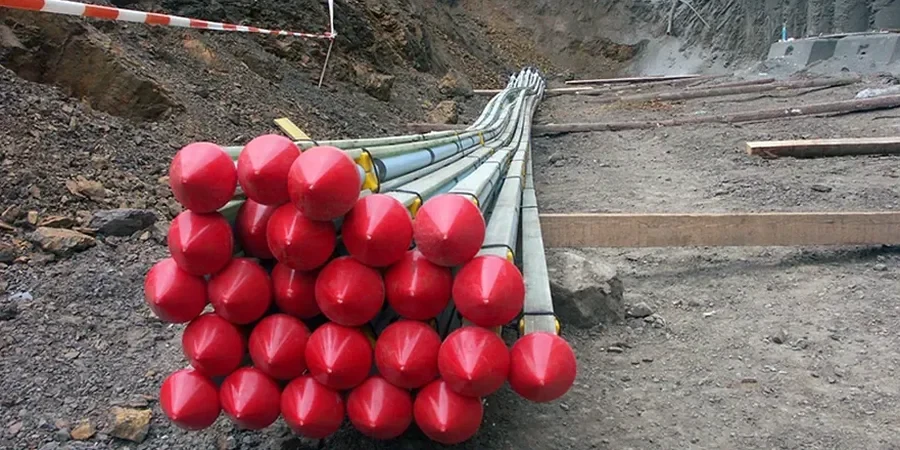
Kilkenny’s geology shifts quickly from the steep Carboniferous limestone of the Nore Valley to deep glacial tills across the western uplands. A single anchor scheme rarely works for the whole county. On the Castlecomer Road, weathered shale demands a different design approach than the compact gravels near the River Nore. We define active or passive anchor types based on the site’s in-situ stress state. The design process integrates test pit logging to identify the exact depth of the till-limestone interface, and slope stability modelling when the anchored wall must retain a cutting in the city’s drumlin landscape.
Every anchor is verified against I.S. EN 1997-1:2004 and the relevant execution standard, I.S. EN 1537:2013. The technical team models the bond length from site-specific geotechnical parameters, not from generic tables. The anchor head detail is adapted to the high rainfall exposure class common in the southeast of Ireland, ensuring the corrosion protection system meets the 100-year design life required for permanent works.
A properly designed active anchor applies a controlled lock-off load to the structure, while a passive anchor only reacts when the ground moves — the choice defines the entire serviceability limit state of the wall.
Local geotechnical context
Sites on the east bank of the Nore, close to John’s Quay, often contain a lens of soft alluvial silt at depth. This material creeps under sustained load. A passive anchor installed in that silt will not mobilise its design resistance until the wall has already deflected beyond the serviceability limit. The same risk does not appear on the higher ground of the Western Environs, where dense lodgement till provides an immediate reaction.
Across Kilkenny, the biggest anchor failure mode is not tendon rupture, it is progressive debonding at the grout-ground interface. This risk is managed by limiting the bond stress to the values derived from the in-situ permeability and strength tests, never from presumed values. The laboratory verifies the grout cube strength at 7 and 28 days, following I.S. EN 196-1, before any stressing takes place on the production anchors.
Top questions
What is the difference between an active and a passive anchor?
An active anchor is stressed against the structure before the ground moves, applying a pre-determined lock-off load. A passive anchor is not stressed; it only develops resistance once the structure moves and the tendon elongates. The choice depends on the allowable deflection of the wall.
When is a passive anchor used instead of an active one in Kilkenny?
Passive anchors are used in rock where the wall deflection is expected to be very small, or in temporary works where the cost of a multi-strand system and the stressing procedure is not justified. In the limestone of the Nore Valley, a passive bar anchor in a short borehole can be a very efficient solution for small retaining walls.
What is the typical cost range for anchor design and testing?
A full anchor design package, including the type selection report and supervision of the suitability tests, ranges from €900 to €3,460, depending on the number of anchors and the complexity of the ground conditions.
How is the bond length calculated?
The bond length is calculated from the characteristic bond stress at the grout-ground interface, divided by a partial factor from I.S. EN 1997-1. The characteristic stress is determined from in-situ pull-out tests on sacrificial anchors or from pressuremeter tests in the same soil unit.